
AI: WORLD MODELS VS LLMS
Few of the world’s major AI players are European.
American and Chinese companies dominate the field.
What’s worse, when promising European start-ups reach a certain size, they are often gobbled up by American investors.
Take the case of Gleamr, a Paris-based medical services company created in 2017 which specialises in the application of AI to radiology, mammography, MRI and CT. In nine years it had built up a portfolio of 700 customers, making 60% of its sales in Europe, 22% in the USA and 18% in the rest of the world.
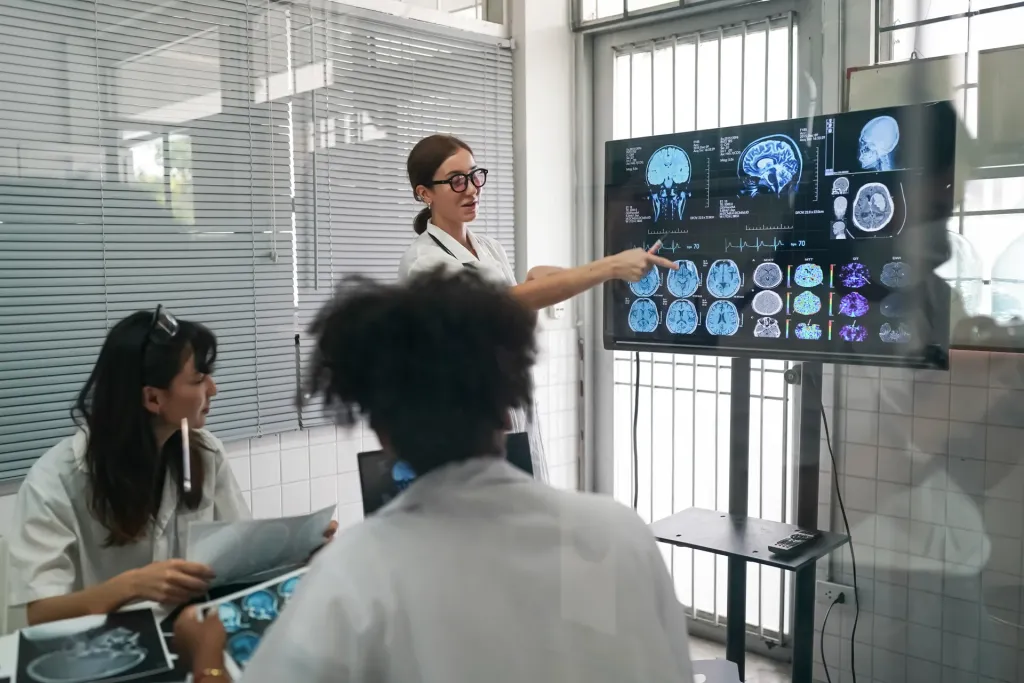
Gleamr was acquired in March by an American company called RadNet for 230 million euros.
Europe is trying to find ways to dissuade European start-ups from selling out to American firms, while at the same time attracting some prominent European researchers back to the Old Continent.
Drum roll then for 64yo Frenchman Yann Le Cun, a prominent computer scientist who has lived for many years in the United States and who was Chief AI Scientist at Meta for 10 years.
The head office of Le Cun’s new company, AMI Labs, will be in Paris, with other offices in New York, Singapore and Montreal.
AMI Labs is focused on a new type of AI architecture called “world models”.
Says AMI Labs’ Chief Scientific Officer, Saining Xie: “I believe that achieving human-like intelligence means moving beyond language-only systems toward world models that learn directly from continuous, real-world sensory input… systems capable of understanding, creating, reasoning, planning, and developing commonsense about the physical world”.
The AMI Labs team claim their systems will be more successful in incorporating safety and controllability constraints, making it particularly suitable for industrial process control, automation systems, wearable devices, robots and medical scenarios.
Many of the people in the team Le Cun and CEO Alexandre Lebrun have put together have experience at Meta and Google. Shanghai native Pascale Fung (馮雁), the only woman in the top team, will be responsible for Research & Innovation.
In just three months, AMI Labs has attracted USD 1 billion in funding.
Investors include Eric Schmidt, the ex-boss of Google, Singaporean investment firm Temasek Holdings, Samsung, Softbank, and prominent figures in European tech such as Xavier Niel and Rodolphe Saadé.

Temasek Holdings and Samsung have also ploughed funds into another start-up exploring “world models”, this one based in the US. World Labs is led by China-born researcher Fei Fei Li, who was previously head of Google’s AI China Centre.
Like AMI Labs, World Labs has secured USD 1 billion in funding.
A revolution is on the cards.
The world’s current AI ecosystem depends on LLMs (large language models).
ChatGPT, Perplexity, Google’s Gemini, Anthropic’s Claude, Meta’s Llama, China’s DeepSeek and Qwen and Mistral’s Le Chat are all technologies based on this probabilistic approach: the algorithm swallows gazillions of data in order to learn how to predict the next word.

“World model” researchers emphasise the limits of the large language models on which these chatbots are built.
“If we were hoping to make them as intelligent as humans, frankly they’re a dead end”, Le Cun has said. He insists that LLMs cannot understand the world, they can only predict text.
Bertrand Hassani, founder of the start-up Quant AI Lab, points to the mechanical limits of LLMs. “The number of parameters they have to manage keeps increasing, and it gets harder to access quality data. What’s more, they consume huge amounts of hardware and energy, and therefore of capital.”
He believes that data confidentiality and data sovereignty concerns, as well as costs, will prompt companies to turn to more efficient models.
The AI landscape could look very different 12 months from now.